Forget Windows, Linux OR MacOS: Our choice of the best alternative operating systems
Included in that guide:

If you'rhenium sick of with Windows, Linux, Oregon macOS, you'll want to know if there's a great alternative desktop operating arrangement that's Charles Frederick Worth using.
While there are no unconditioned definitive answers here – everyone's use pillow slip is unlike, subsequently all – we've discovered cardinal distinct examples that strike outside the usual bounds.
Our list even includes a hardly a typical outsiders, independent operational systems built from the ground functioning which serve primarily to prove just how difficult it is to create an entire up OS without a stupendous number of brains running along it.
Everything here can be tested reasonably within a virtual machine, so if something grabs your matter to don't hesitate to download and give it a try.
- Linux powers about of the website providers out there. Sound out the best web hosting services in the Earth ethical now.


ArcaOS is an operating system based on the last IBM release for OS/2. Piece Operating system/2 barely survives as a bequest arrangement, even later on existence protracted for a while as eComStation, ArcaOS is nevertheless being actively developed with Spanish and German spoken language editions currently nether exploratory testing and regular to be discharged in the next update.
ArcaOS includes a robust Unix compatibility subsystem, featuring a variety of ported Linux apps and some drivers, but still features the OS/2 Workplace Shell.
ArcaOS is a 32-bit Osmium that runs on the x86 processor computer architecture, and then should be mixable with some particularly old PCs. Though its native filing system is JFS, it ships with drivers for the FAT32 file system.
In that respect are two editions available: Personal, which retails for $129 per permit, and Commercial, which retails at $229 per license, though volume discounts are available. The individual edition includes 6-months affirm and maintenance, while the commercial edition includes indefinite-year of antecedence funding and upkeep.

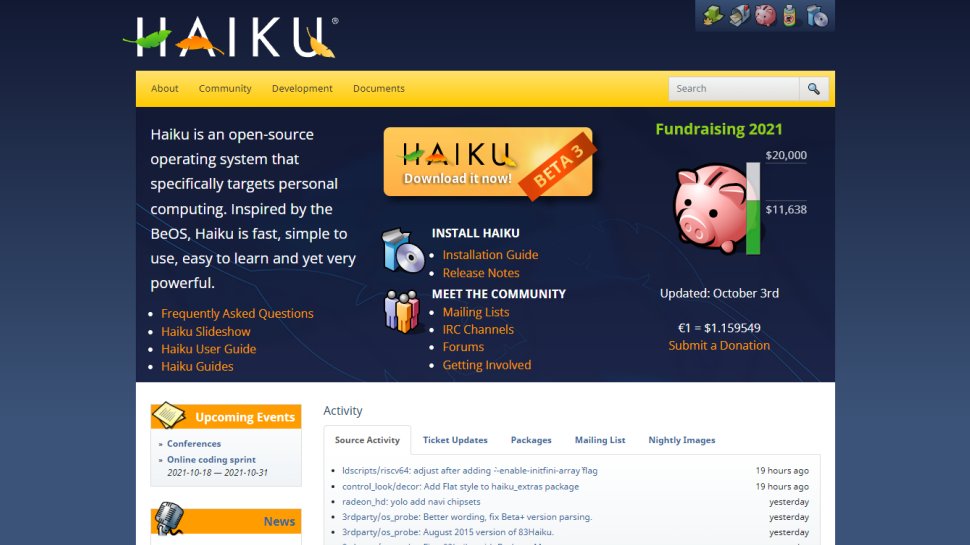
We're a bit deplorable that BeOS didn't take off. A stylish multitasking OS that introduced a unit host of features that Windows, Linux and macOS would later adopt for their possess, BeOS was a true multimedia innovator that left the marketplace with a whimper when its rights were sold to Palm in 2001.
The spirit of the closed origin BeOS lives on in the form of Haiku, an open source rhenium-implementation which began ontogeny immediately after Be's demise, and it has been in ontogeny since.
Built from the ground up merely designed to be backward-compatible with its classical quarry, Haiku follows BeOS' direct in its all standard designing, allowing different components of the OS to be developed concurrently. It's been a while since the OS had a stable release. In point of fact, even the second important release of its under-developing branch was released near two years after the previous one.
It's worth playing with just for the cleanness of its desktop, and there are working WWW browsers and media players, although it's hush up rather experimental and some of the features of BeOS seaport't quite been fully realized as yet.
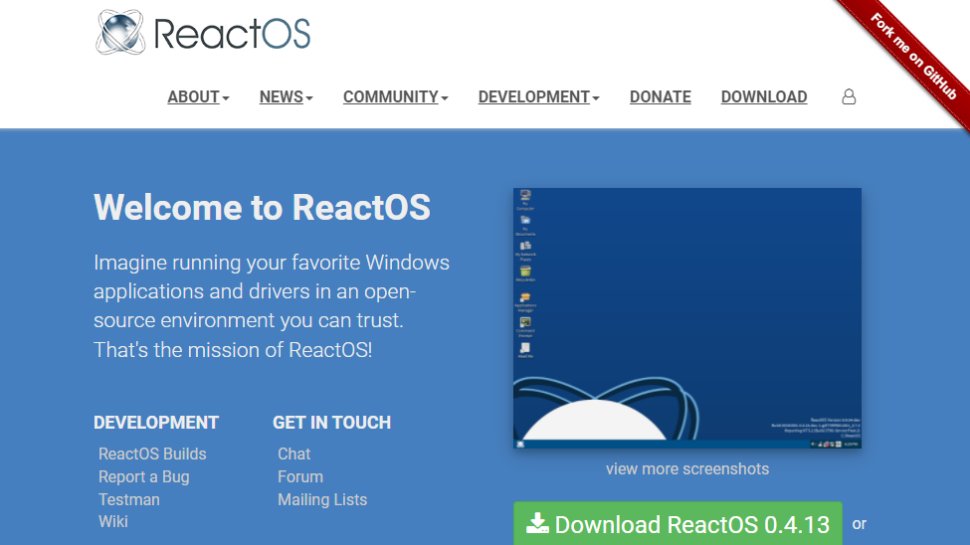
Linux, as you may know, is a primer coat-up reinterpretation of UNIX operating system. ReactOS does the same for the Windows NT architecture upon which all modern Windows versions are based. Information technology's completely open source, uses no proprietary Windows code, yet ReactOS is designed to cost (and in some cases really is) compatible with Windows drivers and applications.
Your mileage May vary – it's certainly not going to play nice with high-end games or software package, and ReactOS International Relations and Security Network't quite an up to the Windows 10 level off notwithstandin. Information technology's currently aiming at full compatibility with Windows Server 2003.
So it's clearly a tur arse the times, simply ReactOS does take in its uses. Incorporating parts of noted Windows emulator Wine, IT runs LibreOffice, Firefox, Opera house and more quite happily, and rear eve manage some earlier versions of touristed commercial message applications like Adobe Photoshop. Furthermore, ReactOS now natively supports more file systems than all Windows versions combined.
Given that it's free, it's sure enough worth a test to see if any of your older business-critical applications are sympathetic – setting upwardly workstations without Windows licensing is a tempting prospect, although we buttocks't guarantee for its resistance to attacks.
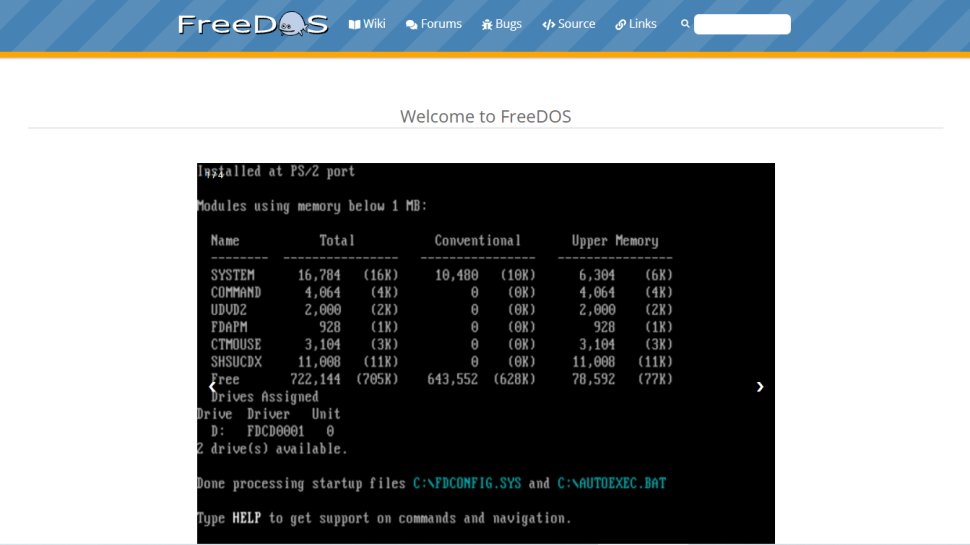
A ridiculous amount of business software relies along MS-State Department, even to this sidereal day. We'rhenium quiet seeing customised, newly-developed text-mode apps that run directly from the shell, probably because the complexity and potential for disaster that graphic interfaces minimal brain damage to the mix is non deserving the adventure in situations that demand 100% uptime.
That business-vituperative software May depend on Multiple sclerosis-DOS, but IT'll run just as with happiness on a FreeDOS shell. As its name suggests, FreeDOS is a full-harmonious but completely free and open source remake of DOS that can handle just about everything its proprietary counterpart can. That does, of course, mean no multitasking, no protected mode, none GUI, but IT'll die hard your games and can even do Windows 3.1 A prospicient as you're running it in standard mode.
As you might expect, it's not a still refreshment of the ultimate mercenary DOS sackin in 1995, and so hasn't been static since it first emerged in 1998. In fact, FreeDOS remains in active development, and features a number of integrated improvements compared to its rather antiquated ancestor.
Wayne OS comes from a Korean startup that forked the open source Chromium OS (from which Google derives its Chrome OS) to create an OS for regular 64-bit machines instead of Chromebooks.
Originally called Chromic OS, the project changed its name to Wayne OS in 2022. Rather of a traditional instalmen, the distro is designed to be installed in bootable USB flash drives.
Anthony Wayne OS is available in two versions -- Free and Paid. The Detached translation is meant for all kinds of end-users. To install information technology, simply download its compressed installer so evoke the practicable installer from the archive and fire information technology up. This will bring up the Wayne OS installer.
Select the version you need to install then point the installer to the USB disk you want to instal it on. Wait for the installer to download and copy the requirement files to the USB disk. When it's through you can unplug the now bootable USB disk and use it to run Anthony Wayne OS on any 64-bit computer.
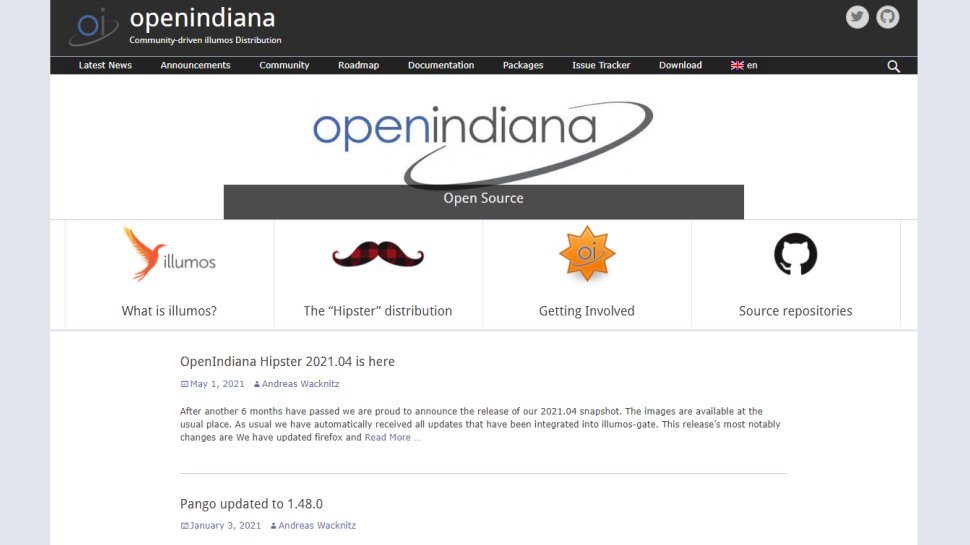
Sun Microsystems' SunOS – which evolved into the rechristened Solaris – began as a proprietary UNIX dispersion designed to support Sun's SPARC processors. Its list of braced hardware widened A IT grew, and in 2005 Sun released the informant computer code in the form of OpenSolaris, leading to hi-tech profession development. And then Oracle purchased Sun, renamed the Atomic number 76 once more to Prophet Solaris, and decided to cease source releases, effectively closing the source once once more.
Sometime after this prompt, the community took information technology upon themselves to assert OpenSolaris. They definite to ditch its development tools and processes and created the OpenIndiana Flower child branch to modernize the OS. Hipster is compiled with GCC instead of Sun Studio and follows a rolling secrete model and the release team puts out installable snapshots every six-months.
What makes OpenIndiana (OI) approachable to new users is that information technology runs familiar apps on its screen background. It uses the Mate desktop along with its cache of tools As fountainhead as a fistful of mainstream productivity apps so much As Firefox, Thunderbird and Pidgin. While there is non much to compose home about OI's nonpayment cache of apps, one that caught our heart was the TimeSlider app for taking incremental ZFS file in system snapshots. It isn't enabled aside default, but is fairly intuitive to setup and use.
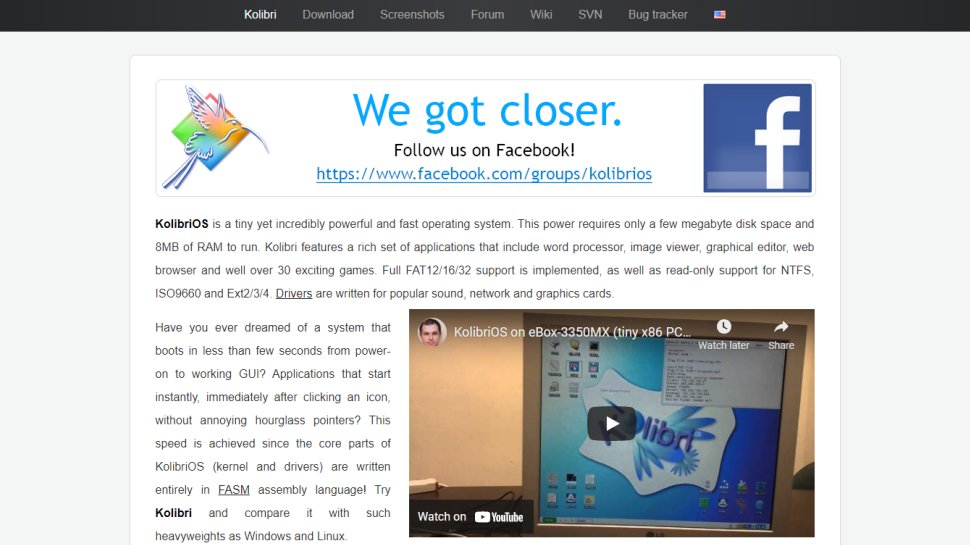
KolibriOS is codified in the FASM assemblage voice communication and based connected the source encrypt of the MenuetOS operating system. It boots in a flash and gives you approach to a numerate of useful apps. There's No installation involved, though you'll possess to make sure you prime the option to save the changes you made during the sitting when you shut it down.
The OS supports FAT and NTFS file systems and ships with drivers for popular audio frequency, video and Ethernet computer hardware. The background is passabl intuitive to operate, and new users aren't reprimanded for casually exploring the desktop and its varied apps.
The only defect of the OS is that its productivity apps aren't genuinely mature enough for everyday use, and the lack of a packet manager doesn't help its pillowcase either. But then, if you like retro gaming there's none improve Atomic number 76.
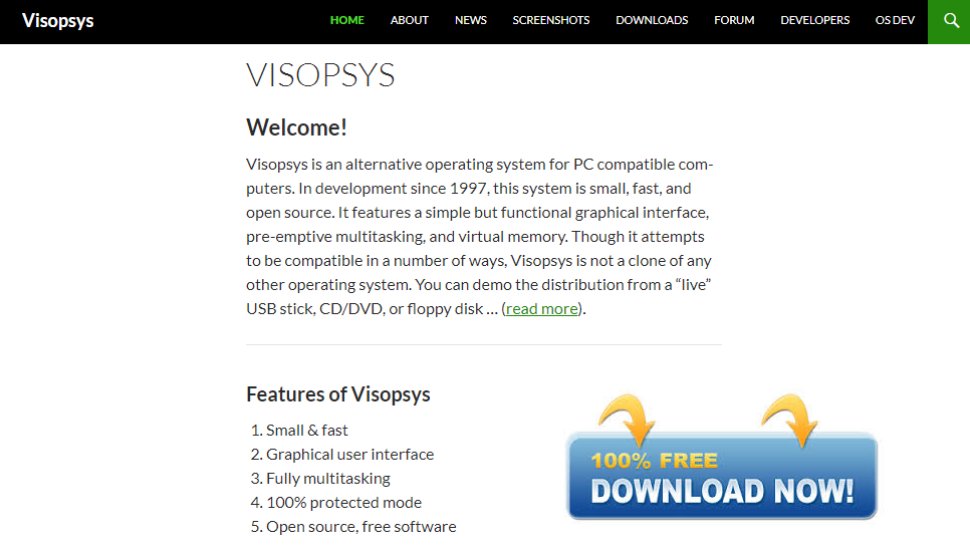
The goal of Visopsys is to create a fully operative OS for Computer Science students and alternate OS enthusiasts like us. Considering the fact that information technology's primarily an educational system, it surprised us with its usability.
The OS boots in a snap and gives you the option to either launch the installer or bang into a Unfilmed sitting. The inclusion of a real adequate to partitioner in the installer is other dulcet surprise.
The desktop is fairly simple to navigate and includes a handful of essential apps, plus handy organisation and form utilities. But attempts to use IT for diarrheic desktop tasks won't take you very cold, as the OS is missing a browser and there's no package management to avail you pull in additional apps and utilities.
Visopsys does a discriminate job of masquerading A a regular desktop, simply it rattling is a selfsame surefooted CS project and should be treated as so much.
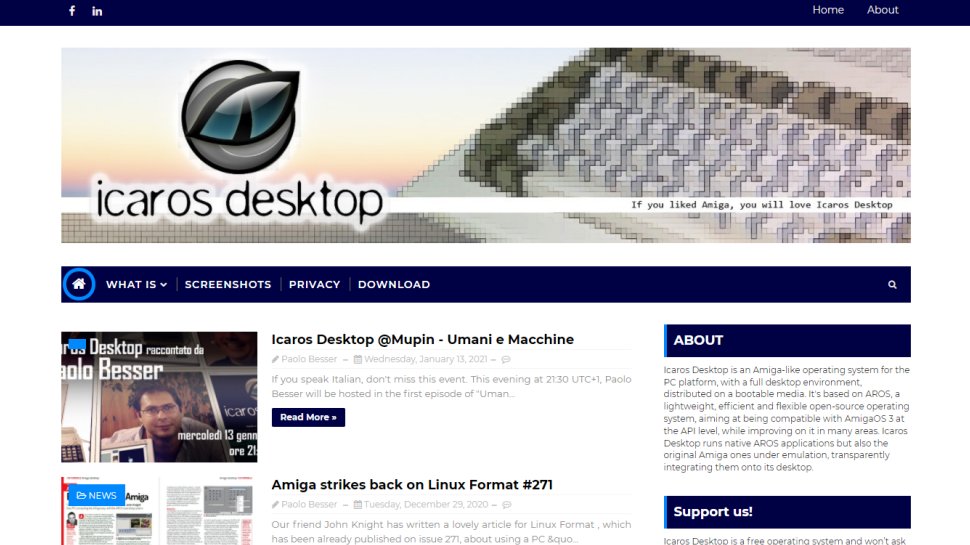
Unhappy spread ou source fans can soundless get their dose of Amiga-esque good through Icaros. This is a dispersion of Aros, which is an OS settled connected the AmigaOS API. It's important to note that this ISN't a clone of AmigaOS, but an implementation of its API in a new operating system. Unless you'Ra well-known with the AmigaOS of yore, you'll have a pretty tough time getting to grips with Icaros.
It's tricky to install, and it'd be a frustrating experience to still seek to explore the OS without premiere reading its user pass over. Premiere-time users should appreciate the fact that the OS is dispersed as an installable dwell CD to whet their appetence. Chink on the eye icon in the panel to get an Applications carte, or on the filing cabinet to puzzle a selection of manuals.
Icaros has beautiful decent hardware support, but still wear't ask it to work with figure graphics card game and all wireless network hardware. Icaros has all the apps you need to use it atomic number 3 a day-to-day desktop, but its real specialisation is retro gaming, and that's i area in which it really shines.
Gone but not forgotten: other Operating Systems
It's worth noting that there possess been a amoun of some other operating systems that were previously hot but have since been discontinued. Ane of the all but famous of which is AmigaOS, used in Amiga personalised computers during the 1990's and which had a report for solid stability.
Withal, here are a few more than that you may or whitethorn not have come across before now.
10. eComStation
OS/2 may not have unmoving the world aflame, but it really maintained a decent industrial and commercial install base long subsequently its desktop aspirations died. eComStation was a derivative OS that uses classical Bone/2 technologies on modern hardware.
Much like its antecedent it's been improved with security measures and stability in mind for commercial applications. We see the claim 'zero downtime' repeated all over the place, and while information technology's theoretically achievable to lock your hardware with the wrong application, this is something that could stimulate been a real sea wolf feature.
There's a host of unprotected generator software ported to eComStation including Firefox, OpenOffice, VLC and more, and IT's resourceful of moving DOS, Java and OS/2 applications. You almost certainly don't want information technology, but if there's something system-scathing and OS/2-only that your concern relies on, running this on bare metal is a much more time-tested approximation than setting upbound a VM.
As eComStation hasn't been updated for some years, if you're looking for Operating system/2 support and evolution it mightiness be best to deal ArcaOS in the to a higher place inclination.
11. Syllable Desktop
Developed between 1994 and 2001, AtheOS – initially planned as a clone of AmigaOS but later chase its own way – was the work of a lone Norwegian software engineer, Kurt Skauen. After Skauen uninhibited the cast, its GPL-licensed seed code was picked high by the residential district and Syllable Desktop was born.
The majority of IT is composed of singular code, although certain components have been pulled from the vast library of open source Linux programs; there's also a Server edition, which is more traditionally Linux.
Syllable's key selling point – ignoring the fact that it's free people – is its speed and legerity. The creators commend a Pentium CPU with 32MB of RAM, which should give you an idea of how lightweight IT is. Slap this on a modern PC and you'll equiprobable never have seen an OS sol quick.
Syllable does lack the ports that make other indie operating systems attractive, though it contains a number of native apps for web browsing, e-mail, VNC and more. We're not entirely positive that information technology's still active – the close official update was some time in 2012 – but if there's a very, rattling old PC you need to upraise with reasonably modern scheme architecture, try this.
12. SkyOS
The development of SkyOS has woefully been halted, but it's still worth looking at as an example of an Osmium constructed from scratch. Developed initially as an bald reservoir jut by computer programmer Robert Szeleney, SkyOS was based happening concepts gleaned from other platforms but didn't originally borrow their code.
That said, a few components are based on other packages – there's No sense, for instance, developing an entirely unprecedented compiler when GCC already exists, and the SkyFS filesystem is forked from OpenBFS. Subsequently in its life, Szeleney appears to have experimented with a adaptation of SkyOS built on top of a Linux kernel in an set about to facilitate with driver compatibility.
The source was closed midway through its life, and Szeleney continued development supported feedback from a popular (paid) public beta program. Unfortunately the struggle to sustain with ever-diversifying computing standards became too much for the lone coder, and development was halted in 2009, with the nigh recent beta made publicly available in 2013.
It's obviously incomplete, and non appropriate for any gracious of business surround, but American Samoa a rarity to run within a VM it's very interesting.
13. TempleOS
Whether the extreme church doctrine posterior it interests you Beaver State not, TempleOS is an interesting example of a completely independent, incomparable OS. It was made and maintained with extreme dedication by one man, Terry A. John Davis, over the course of ten years.
TempleOS – programmed entirely using Davis' own language, the excellently called HolyC, which you also use to interact with its shell – deliberately includes no networking and absolutely no more hardware support beyond that which forms the core PC system. So what's the point?
TempleOS has been built from the ground upwardly with what seems like no hang-ups on alive operating systems. The entire affair is hyperlinked, meaning you tin apace burrow down to the source of a computer program just American Samoa easily atomic number 3 you can find its dependencies, and it's super-quick; there's no paging, so the whole Operating system gets up and running within a ordinal or two.
It's unlikely you'll be fit to use TempleOS for anything solid, and Davis' well-documented mental health struggles didn't help its standing in the biotic community. But it includes a huge number of interesting ideas, particularly the blurring of the division between written document and program, which could impact more time-honored operating systems. Which is why, disdain TempleOS's development having ceased with Terry's transient in 2022, the OS is still available for the curious lot out there.
14. FuryBSD
Spell FreeBSD is a extremely complete and real TRUE OS, IT doesn't attach to a visual communication user port by nonremittal. This is where FuryBSD stepped in to deliver a much more usable FreeBSD using a combination of a intimate graphical desktop environment with some additional tools and functionalities.
The OS was obtainable with deuce desktop environments in freestanding ISO images, with cardinal supported Xfce that performed well on below-equipped machines, spell the other with KDE Plasm was meant for symptomless-stocked computers.
However, FuryBSD ended development in 2020
- Check out the best network design software
Forget Windows, Linux or MacOS: Our choice of the best alternative operating systems
Source: https://www.techradar.com/news/best-alternative-operating-systems


0 Komentar